Why 8 Divided by 2 Is Breaking the Internet Again: the Math Problem Nobody Can Agree On
 By Robert Thorne
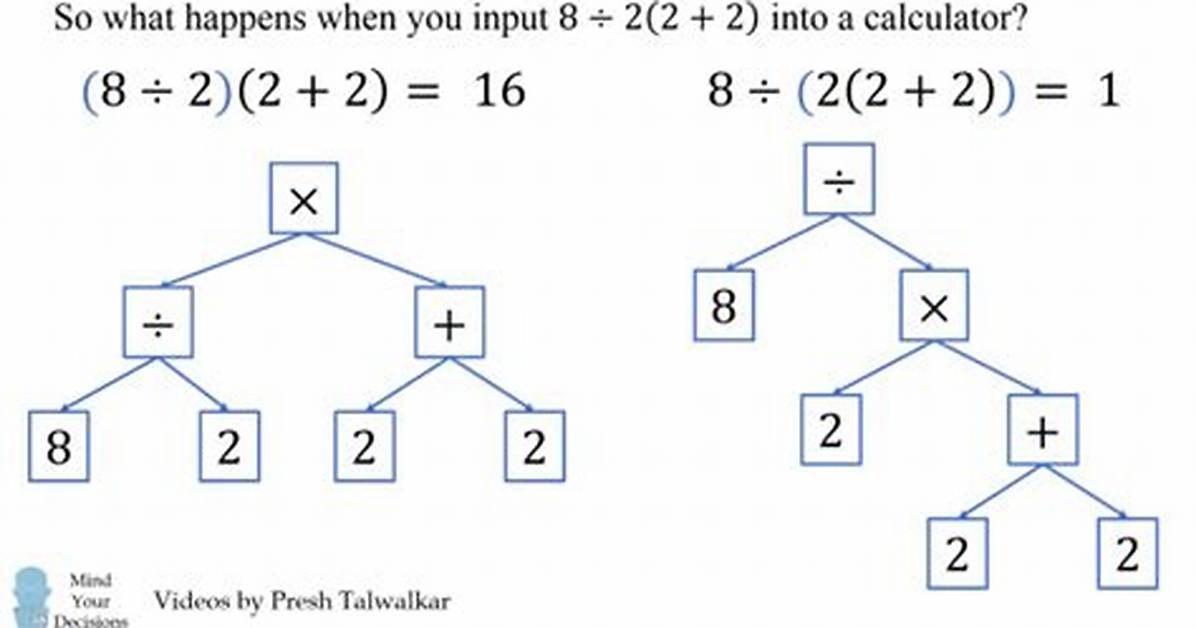
The confusion is not limited to human debaters; consumer hardware displays the exact same split. Computational engines must parse input strings using internal operator precedence algorithms, and those algorithms have shifted over time.
Texas Instruments made this exact architectural shift across product generations. On an older TI-82 or TI-83 running early firmware, typing 8/2(2+2) produces 1 because the device's internal parser gave implied multiplication higher priority than standard explicit multiplication and division. Beginning with the TI-83 Plus and continuing through modern TI-84 Plus CE models, engineers revised the logic: multiplication by juxtaposition now shares equal precedence with division, returning 16.
Casio calculators experienced similar divergence across product lines. Models such as the fx-991ES PLUS treat implied multiplication as a higher-priority binding operation, producing 1, whereas other software parsers default straight to left-to-right execution. When software engineers do not share a single universal grammar, computing engines provide conflicting outputs for identical text strings.
Robert Thorne covers electric vehicle innovations, autonomous driving systems, global mobility trends, and automotive engineering developments.
