What Does Ennui Actually Look Like? Definition, Symptoms, and Behavioral Signs
 By Elena Rostova
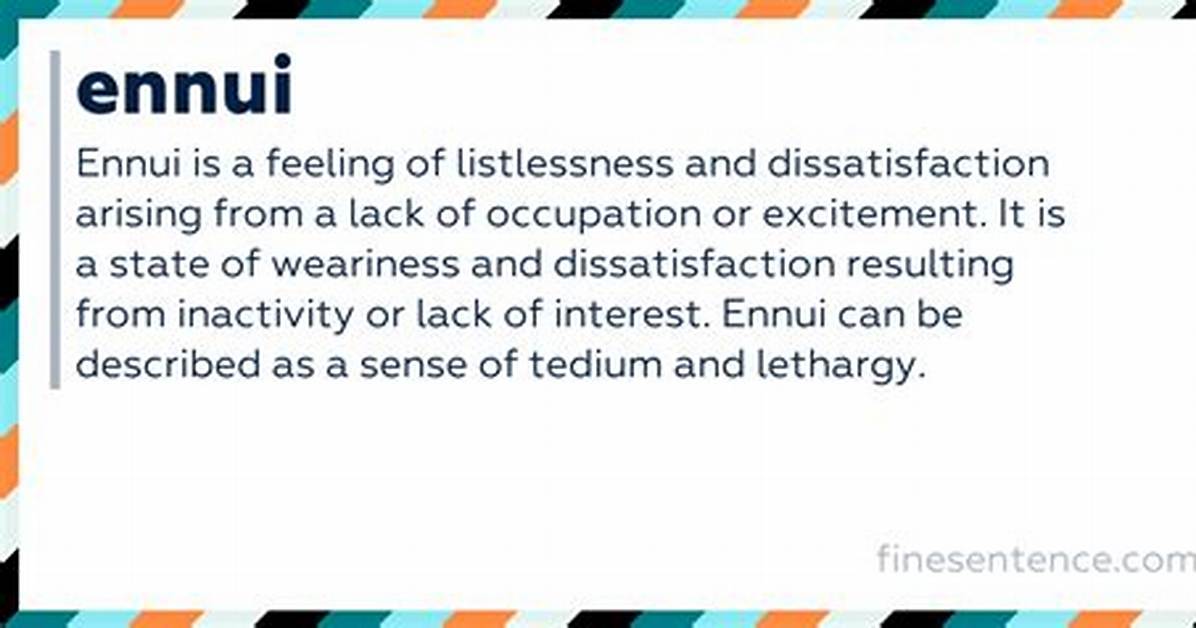
The term traces back through 13th-century Old French, linked directly to the Latin phrase in odio esse, meaning "to be hateful or loathsome." Long before 19th-century French poets like Charles Baudelaire romanticized it as the defining malady of Parisian intellectuals, early Christian desert monastics grappled with a near-identical condition called acedia. Fourth-century theologian Evagrius Ponticus labeled it the "noonday demon", a spiritual torpor where the monk stares out the window, despises his cell, and feels that time has slowed to a crawl.
In modern culture, the concept resurfaced globally through the character in Inside Out 2, presenting a caricature of teenage detachment. But the cultural resurgence reflects an authentic sociological baseline. Modern adults experience the same paralysis: the world offers endless tasks, infinite content, and relentless stimulation, yet none of it delivers a sense of purpose. Baudelaire warned that while physical vices destroy the flesh, the quiet poison of ennui swallows the soul whole without making a sound.
Elena Rostova holds a Master's degree in Public Health Journalism. She covers groundbreaking medical research, holistic wellness trends, mental health awareness, and nutritional science.
