Water Bug vs Cockroach: Why That 'Harmless' Bug Might Be a Costly Infestation
 By Robert Thorne
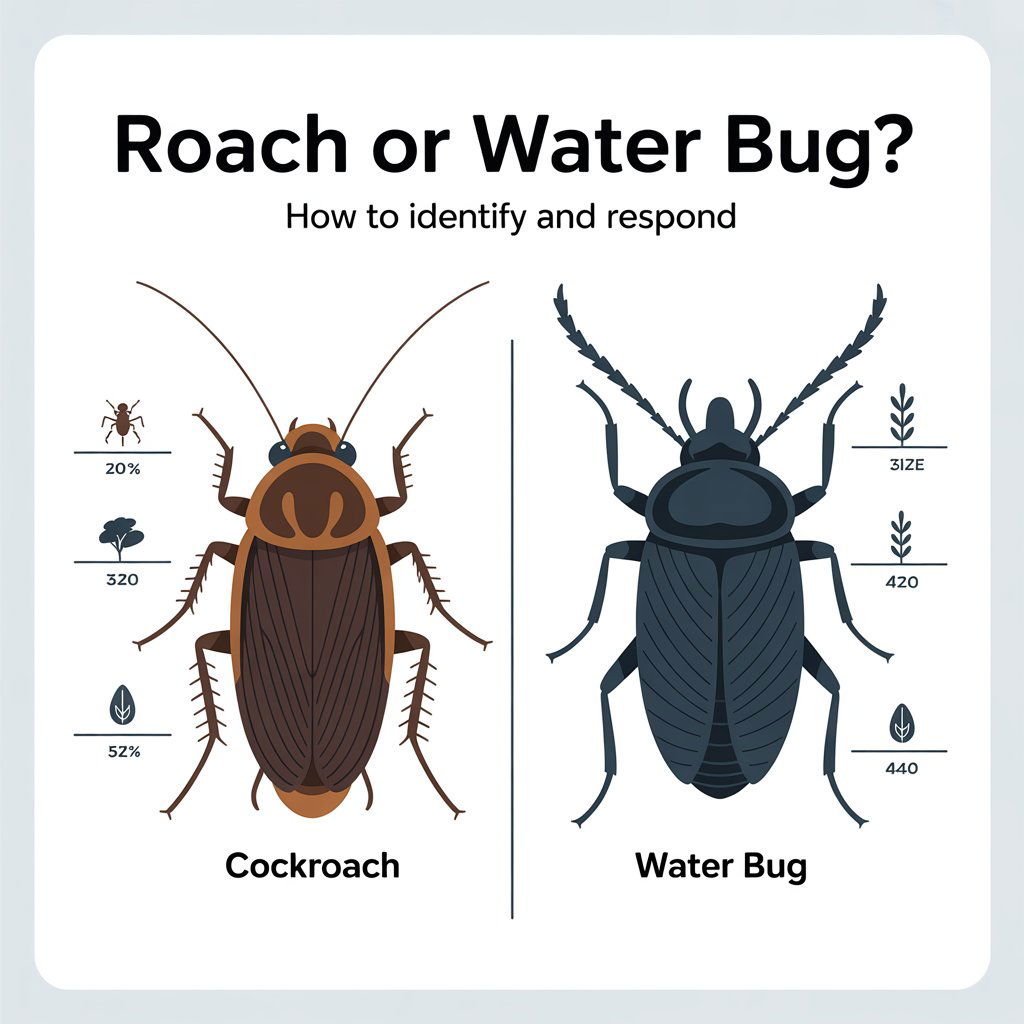
The term "water bug" functions largely as a psychological shield. In the mid-Atlantic and southern United States, generations of residents have used the moniker to describe the American cockroach (Periplaneta americana) or the dark, heavy-bodied Oriental cockroach (Blatta orientalis). Admitting to a roach problem carries an intense, misplaced social stigma tied to sanitation. Calling the creature a water bug implies an unavoidable consequence of local humidity rather than a domestic pest issue.
Entomologists categorize genuine water bugs under the hemipteran family Belostomatidae, commonly known as giant water bugs or "toe-biters." These animals are obligate aquatic predators that spend their lives submerged in freshwater ponds, drainage canals, slow-moving creeks, and marshes. They feed on minnows, tadpoles, snails, and small amphibians using specialized piercing-sucking mouthparts. If a giant water bug lands on your porch, it flew there by accident while tracking the glow of your security lighting during warm summer mating flights. It cannot survive long inside dry indoor air and possesses zero capacity to infest drywall or kitchen cabinets.
Conversely, American and Oriental roaches seek damp human habitats. They flourish inside sewer ties, moist crawlspaces, sub-slab aggregate, and utility pipe chases. When record-breaking summer heat dries out municipal drain lines or torrential autumn downpours flood street sewers, these insects flee upward. Once inside, they exploit grease spills, cardboard glue, pet food residue, and minor plumbing leaks, establishing active breeding colonies behind kitchen toe-kicks and hollow bathroom partitions.
Robert Thorne covers electric vehicle innovations, autonomous driving systems, global mobility trends, and automotive engineering developments.
