Vocal Fry Meaning and Audio Guide: How to Identify It, Control It, and Speak Confidently
 By Alexander Ross
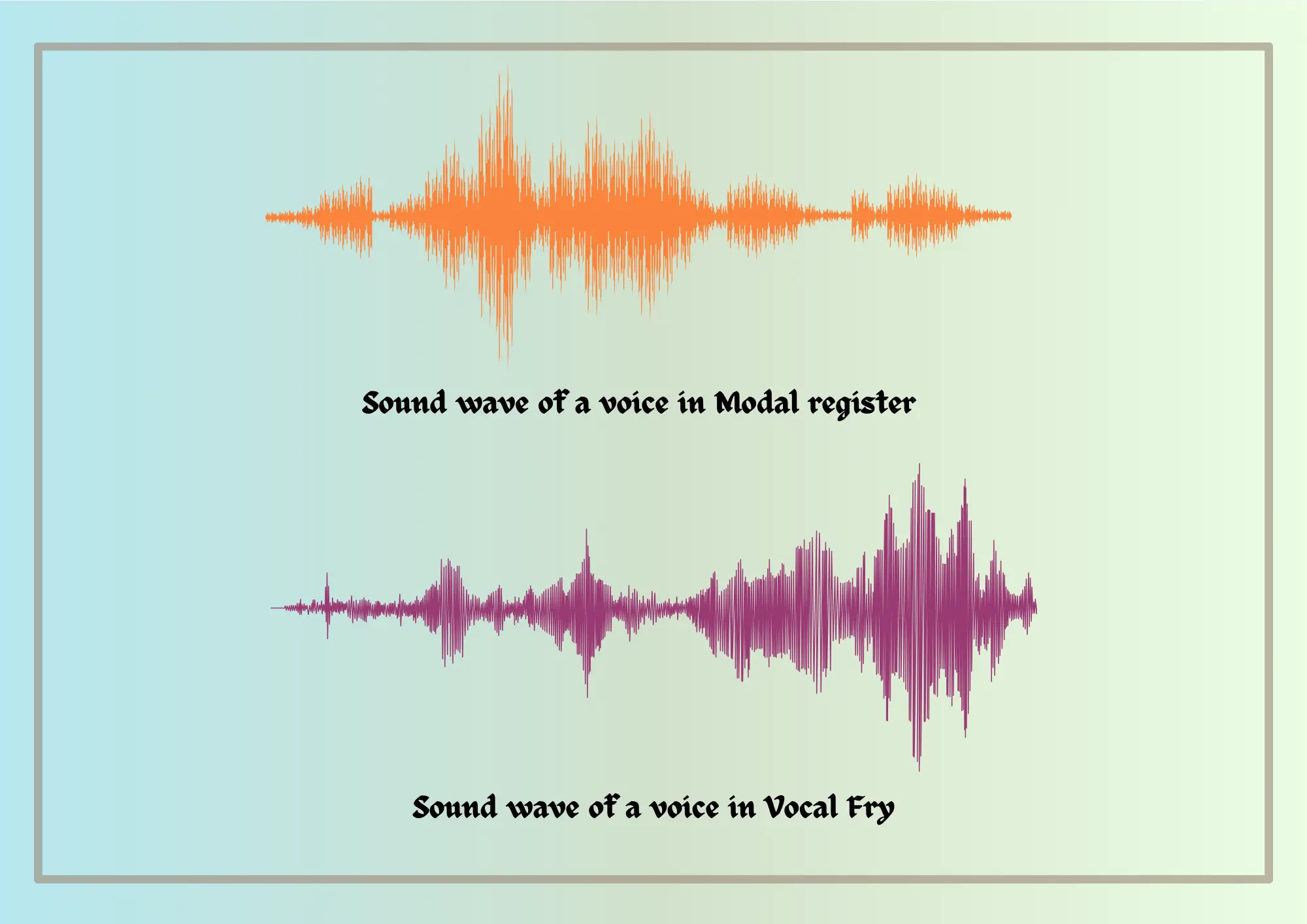
Controlling vocal fry does not mean adopting an artificial, performative voice. It involves establishing consistent breath support so your vocal cords vibrate freely across your entire pitch range.
Three targeted physical adjustments can balance your natural vocal delivery:
1. Active Diaphragmatic Breath Pacing
Vocal fry almost always signals an empty lung reserve. Practice exhaling fully, releasing your abdominal wall, and inhaling so your lower ribs expand sideways. When speaking, match sentence length to your exhalation. As you approach the final words of your thought, avoid letting your rib cage collapse entirely. Replenish your breath before your air supply drops below the threshold needed for modal tone.
2. Sustained Lip Trills and Semi-Occluded Vocal Tract (SOVT) Drills
Perform gentle lip trills (blowing raspberries on an easy pitch) for two minutes before phone calls or presentations. Trills create backpressure in the mouth, balancing the air above and below the vocal cords. This backpressure eases arytenoid tension, encourages symmetrical vibration, and brings the voice out of the laryngeal basement into clear forward resonance.
3. Upward Inflection Anchoring
Record yourself reading a business email or book passage out loud. Notice if your pitch drops off an acoustic cliff on the final word of every sentence. Intentionally keep the final vowel sound lifted by half a musical step. This subtle upward inflection keeps the vocal cords engaged, preserving clean clarity through to the period.
Alexander Ross has covered the video game industry for a decade, writing deep dives on game design, esports tournaments, VR developments, and gaming culture.
