Visual Differences: How to Instantly Tell Decorticate from Decerebrate Posturing
 By Sarah Jenkins
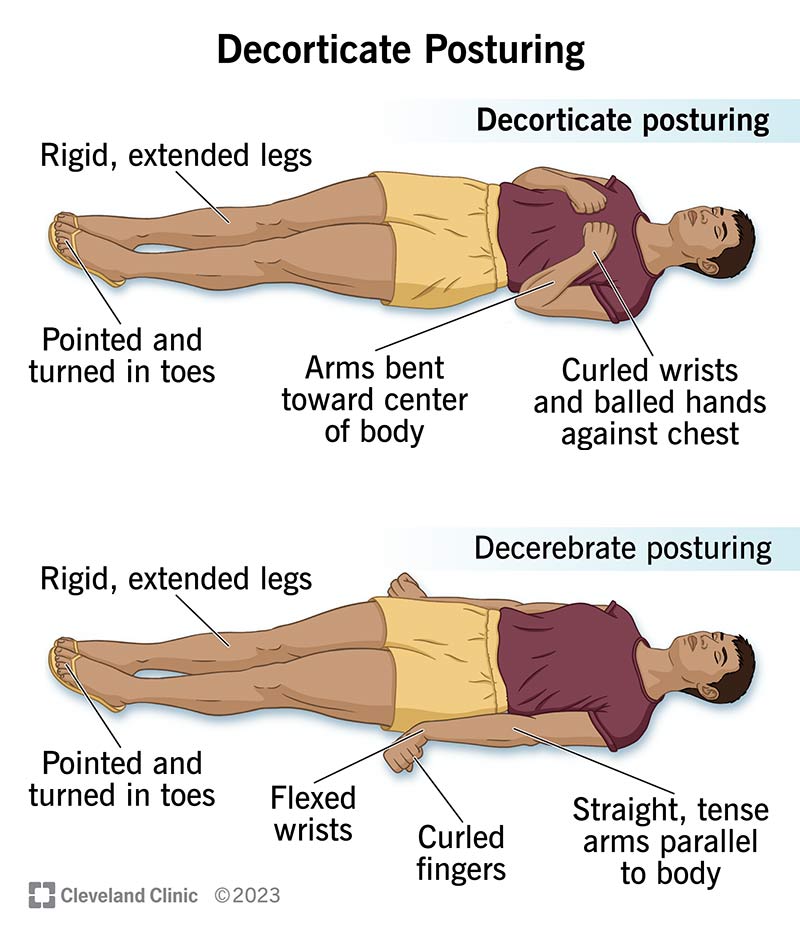
Structural trauma is not the sole cause of abnormal posturing. Severe metabolic derangements can disrupt cortical inhibition without physical brainstem compression. Clinicians often find that acute hepatic encephalopathy, profound hypoglycemia, and anoxic brain injury shut down cortical activity while leaving brainstem tracts firing.
In fulminant hepatic failure, blood-borne neurotoxins, principally ammonia, cross the blood-brain barrier. Astrocytes metabolize ammonia into glutamine, drawing fluid into cells and triggering widespread cerebral edema. This toxic cascade impairs cortical neurotransmission. If ammonia levels rise rapidly, the loss of cortical suppression can trigger decerebrate extension, closely resembling a structural transtentorial herniation on physical exam. As documented in the Cureus clinical analysis, aggressive metabolic interventions like lactulose therapy, rifaximin, and continuous renal replacement can clear these toxins and reverse decerebrate posturing. This recovery underscores why bedside clinicians must run comprehensive metabolic panels alongside urgent CT scans before determining a patient's prognosis.
Sarah Jenkins is a veteran tech journalist with over 12 years of experience covering artificial intelligence, mobile innovations, and digital ethics. Her insights have appeared in leading technology publications worldwide.
