The Science of Morbid Curiosity: Why Cruelty Captivates the Mind
 By Robert Thorne
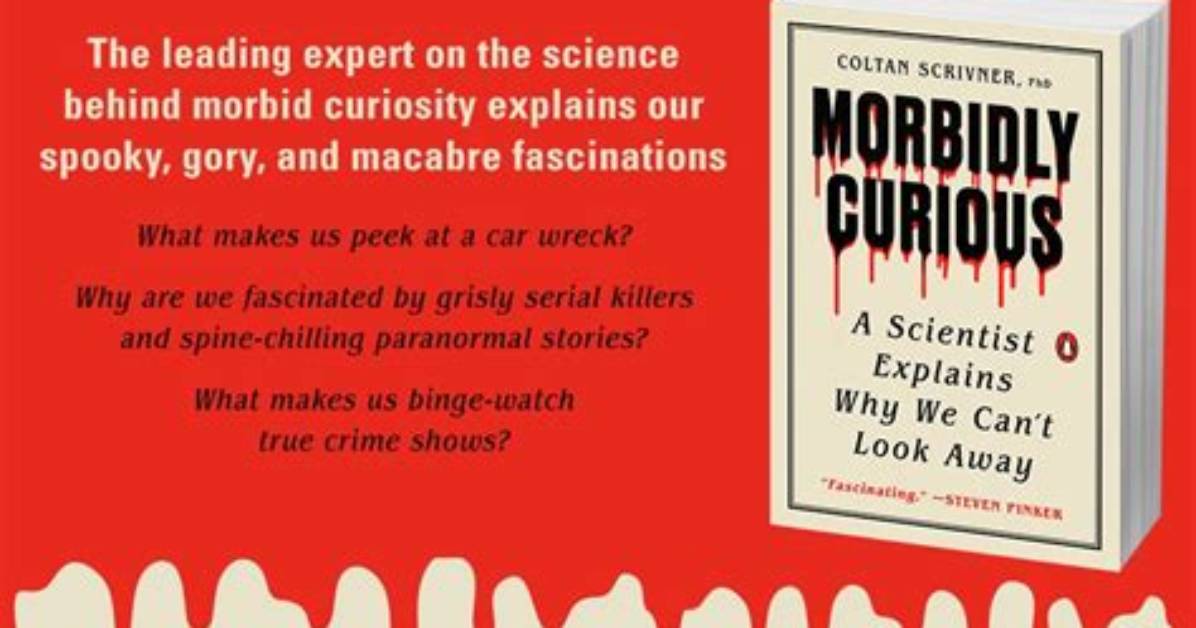
Interest in violent crime sits on an intricate behavioral spectrum. On one boundary lies morbid curiosity, an investigative openness toward death, danger, and taboo physical violations. On the opposite boundary lies subclinical or "everyday" sadism, a personality trait identified by psychologists Delroy Paulhus and Kevin Williams when expanding the traditional Dark Triad into the Dark Tetrad: Machiavellianism, narcissism, subclinical psychopathy, and subclinical sadism.
Everyday sadists do not necessarily commit felony assault. Instead, they demonstrate a willingness to expend personal effort, time, or social capital simply to witness or cause another person's distress. In laboratory settings, participants scoring high on subclinical sadism scales regularly choose to perform boring tasks to increase the blast of white noise directed into a competitor's headphones. They exhibit intrinsic reward signals when another human experiences discomfort.
By contrast, an individual with a high degree of open-mindedness toward dark topics consumes disturbing material to reduce uncertainty. Evolutionary psychologists note that humans are wired to monitor high-stakes survival variables. When you read about an ambush or inspect forensic crime scenes, your brain extracts patterns, maps predator behaviors, and constructs defensive scripts. The experience feels compelling because evolution rewards vigilance around lethal risks, not because the observer desires to duplicate the violence.
Robert Thorne covers electric vehicle innovations, autonomous driving systems, global mobility trends, and automotive engineering developments.
