The Evolution of Satisfying 3D Prints: from Twisty Fidgets to Articulated Slime Balls
 By Elena Rostova
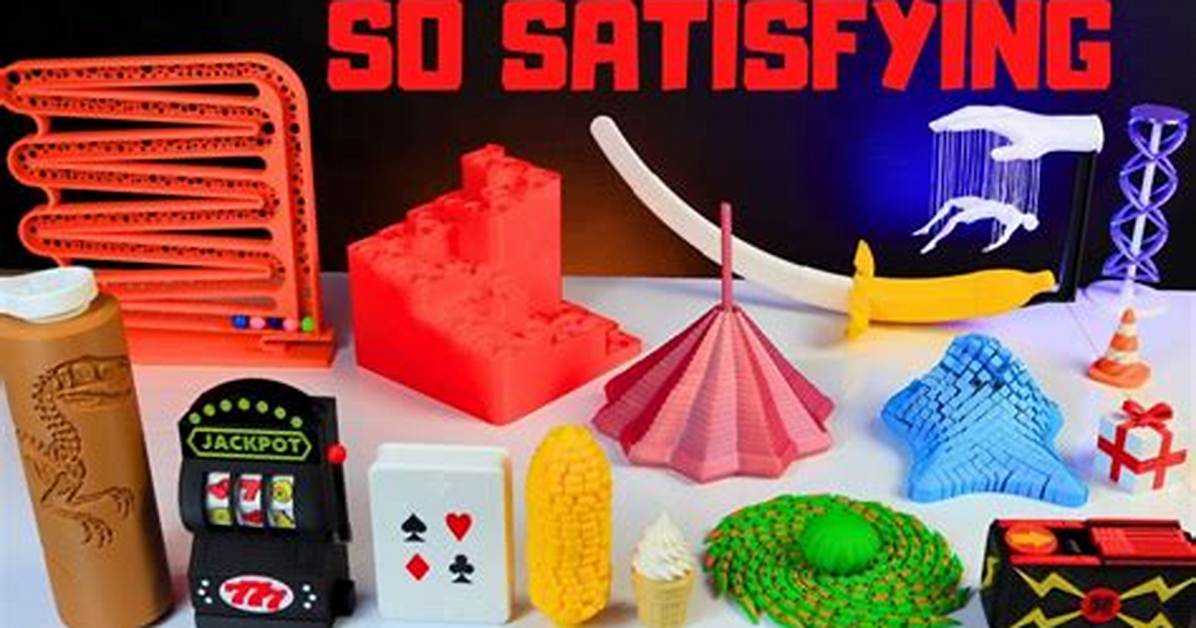
Q1: Why do the joints on my articulated print fuse together into a solid block?
A1: Joint fusion is almost always caused by over-extrusion or insufficient cooling. If your printer pushes even 3% too much material, excess plastic bulges into the built-in clearances. Calibrate your extrusion flow rate, lower your printing temperature by 5°C to 10°C, and ensure your part-cooling fan runs at maximum power during bridge layers.
Q2: Can I print an articulated slime ball using flexible TPU filament?
A2: Yes, but only with designs specifically modeled for flexible tolerances. Standard print-in-place files feature 0.2mm gaps designed for rigid PLA, which TPU will easily bridge and weld shut. Look for models explicitly tagged for TPU with wider internal clearances (0.4mm or greater), and dry your flexible filament thoroughly before printing to prevent stringing.
Q3: Should I turn on supports when slicing print-in-place fidget designs?
A3: No. Keep supports completely disabled unless the designer specifically states otherwise in the print instructions. Built-in support generation will place material inside the captive hinges and joints, making it impossible to clear out the supports without destroying the model's moving parts.
Elena Rostova holds a Master's degree in Public Health Journalism. She covers groundbreaking medical research, holistic wellness trends, mental health awareness, and nutritional science.
