Slip Stitch Vs. Ladder Stitch Vs. Blind Hem: Fact-Checking Common Hand-Sewing Myths
 By James H. Sterling
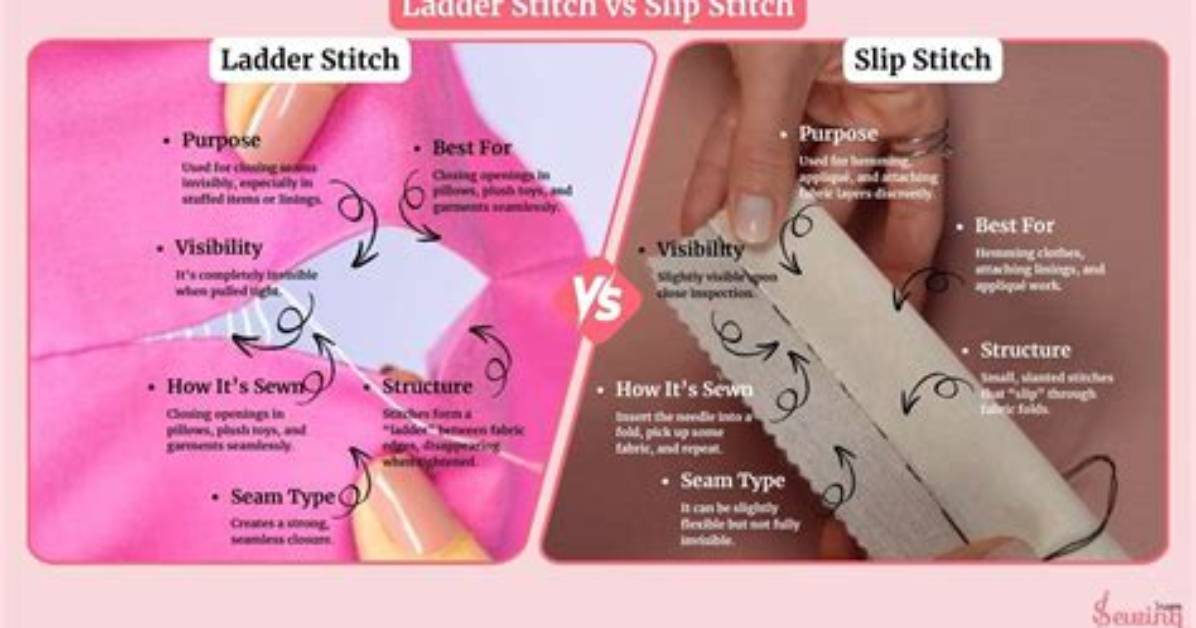
Q1: Can I substitute a ladder stitch when hemming trousers?
A1: No. A ladder stitch joins two opposing pressed folds together edge-to-edge. A trouser hem consists of one folded edge resting flat against the broad, single-layer interior of the leg. Attempting a ladder stitch on a trouser hem creates an unnatural roll and pulls heavily on the face fabric, producing visible puckering.
Q2: Why does my thread tangle constantly when sewing an invisible hem?
A2: Excess thread length and untreated fibers are standard causes. Keep thread length under 18 inches from needle eye to knot. Running hand-sewing thread through natural beeswax and pressing it between fingers coats individual filaments, reduces friction, and prevents knotting inside the folds.
Q3: How many threads of the main garment should my needle catch on a blind hem?
A3: Exactly one or two individual warp or weft threads. Catching more than two fibers creates a visible indent or dimple on the finished right side of the garment, defeating the purpose of an invisible hem.
Q4: Is the slip stitch strong enough for high-stress seams like crotches or armholes?
A4: Never use a slip stitch on stress-bearing structural seams. Slip stitches and ladder stitches offer moderate tension resistance designed for closures and linings. High-stress functional seams require a locked backstitch or machine lockstitch to withstand continuous body tension.
James Sterling reports on renewable energy developments, climate policy, ecological conservation, and green tech innovations around the globe.
