Normal vs Hypertonic Saline: How Different Percentages Clear Airways
 By Alexander Ross
The human bronchial tree relies on the airway surface liquid (ASL), a microscopic fluid layer divided into a low-viscosity periciliary sol and an overlying viscous mucus gel. Cilia beat rhythmically within this sol layer to propel trapped pathogens, dust, and cellular debris upward toward the pharynx. In conditions like cystic fibrosis or non-cystic fibrosis bronchiectasis, this hydration balance collapses. The periciliary layer desiccates. Cilia become flattened under thick, immobilized mucus blankets, halting mucociliary clearance entirely.
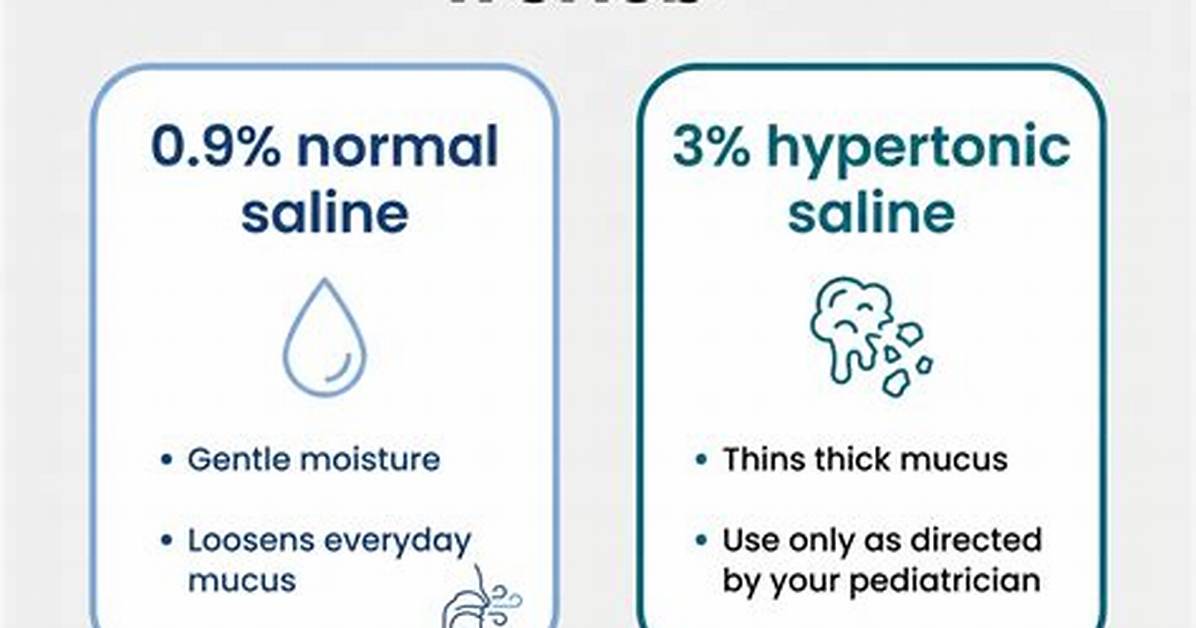
This is where tonicity dictates clinical outcomes. A 0.9% normal saline solution is isotonic. Its osmolarity matches human plasma at approximately 308 mOsm/L. When inhaled as a sterile saline solution, it coats the epithelial surface, moistening dry mucosa and softening superficial crusts without pulling fluid across cell membranes. It acts as an environmental buffer rather than a kinetic driver.
Hypertonic saline upends this status quo through physics. A 7% formulation carries an osmolarity near 2,400 mOsm/L, nearly eight times that of blood serum. When aerosolized droplets hit the airway epithelium, they create a sudden osmotic pressure gradient across the semipermeable cell membrane. Water rushes out of the submucosal tissue into the airway lumen. This influx rehydrates the periciliary fluid layer, suspends the cilia back into an upright beating position, and thins the thick mucus layer from underneath.
Alexander Ross has covered the video game industry for a decade, writing deep dives on game design, esports tournaments, VR developments, and gaming culture.
