How to Hold a Guitar Pick: Complete Step-by-Step Guide for Tone, Comfort, and Speed
 By Chloe Bennett
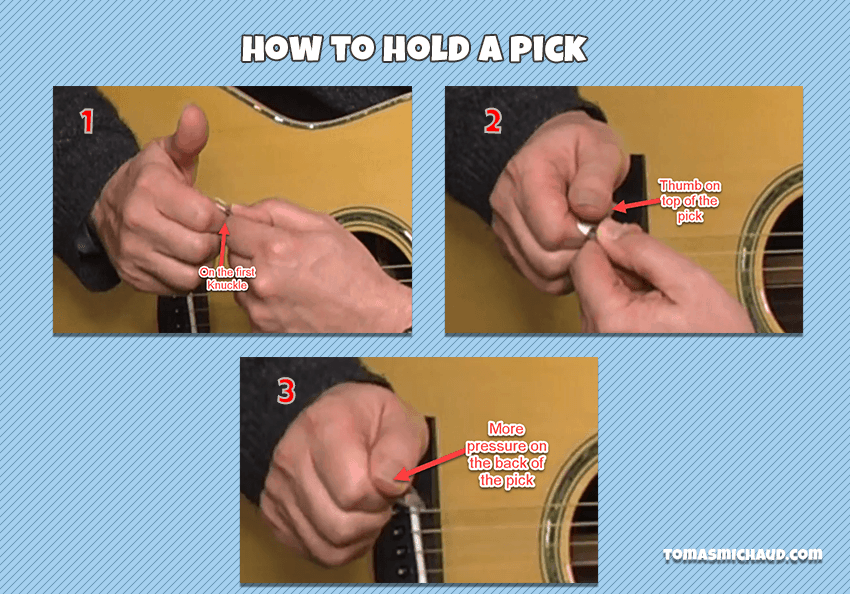
A pick that drifts, rotates, or flies across the room usually suffers from an overabundance of muscular tension, not a lack of it. When a pick strikes a steel string flat, the string pushes back against the leading edge. If the player clamps down to fight that push, sweat builds up, blood flow restricts, and the plastic slides along the skin like a bar of soap.
Hand fatigue prevention begins with micro-adjustments in grip pressure tension. On a scale of 1 to 10, where 1 is dropping the pick on the carpet and 10 is turning your knuckles white, aim for a resting pressure between 3 and 4. The pick should feel seated, not trapped.
When strumming or picking, the pick should yield slightly against the string, tilting backward on the downstroke and forward on the upstroke. This microscopic flex allows the plectrum to glide over string windings rather than crashing into them head-on.
Player communities on guitar forums frequently debate textured grips versus smooth celluloid. Materials featuring matte Delrin finishes, cross-hatch knurling, or raised logos can help players dealing with hyperhidrosis. However, material texture remains a secondary patch for poor biomechanics.
Relaxing the extrinsic hand muscles allows skin oils and natural friction to hold the pick in place. When the thumb is not starved of circulation by hard pinching, the skin maintains a natural tactile grip that prevents unwanted rotation.
Chloe Bennett explores the intersection of pop culture, streaming entertainment, digital trends, and contemporary lifestyle. Her weekly commentary reaches thousands of culture enthusiasts.
