How to Fix the 8125°C Cpu Bug: Complete Diagnostics & Repair Guide
 By Sarah Jenkins
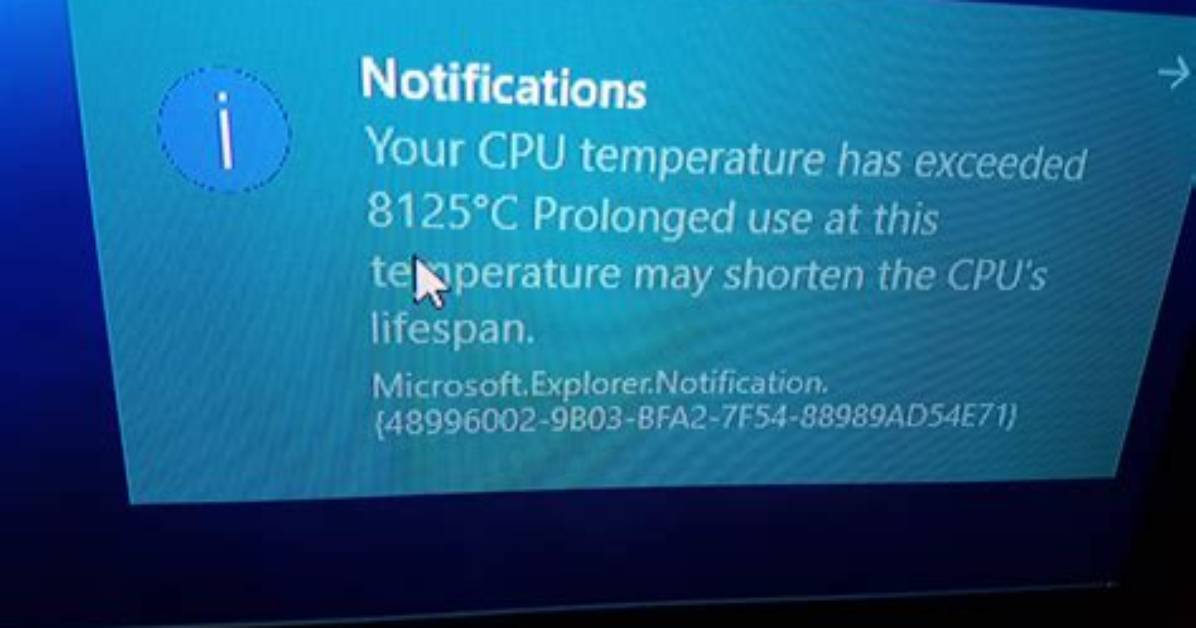
Every modern motherboard relies on a dedicated controller known as a Super I/O chip. Manufactured by companies like Nuvoton, ITE, or Fintek, this microchip sits between low-level analog circuitry and the operating system. It translates physical voltage fluctuations captured by the on-die CPU thermal diode into readable digital numbers.
Hardware sensors do not report round human temperatures. They output raw, hexadecimal values stored in volatile 8-bit, 10-bit, or 16-bit registers. Software utilities retrieve these integers and apply a mathematical scaling multiplier to generate Celsius values. When an uninitialized sensor register is polled, or when a bit-shift error occurs during communication, the monitoring program reads garbage data.
In many embedded controllers, thermal values are scaled using fixed-point arithmetic with 0.125°C or 0.0625°C resolution steps. A misplaced decimal point or an unmapped register state returning a raw unsigned integer value of 65,000 or higher gets crunched through the application multiplier. The resulting output lands squarely on numbers like 8,125°C. Rather than reflecting an inferno, the utility is simply displaying uncalibrated binary noise.
Sarah Jenkins is a veteran tech journalist with over 12 years of experience covering artificial intelligence, mobile innovations, and digital ethics. Her insights have appeared in leading technology publications worldwide.
