From Royal Zardozi to Colonial Exports: Visual Evidence of British Raj Textile Exploitation
 By Sarah Jenkins
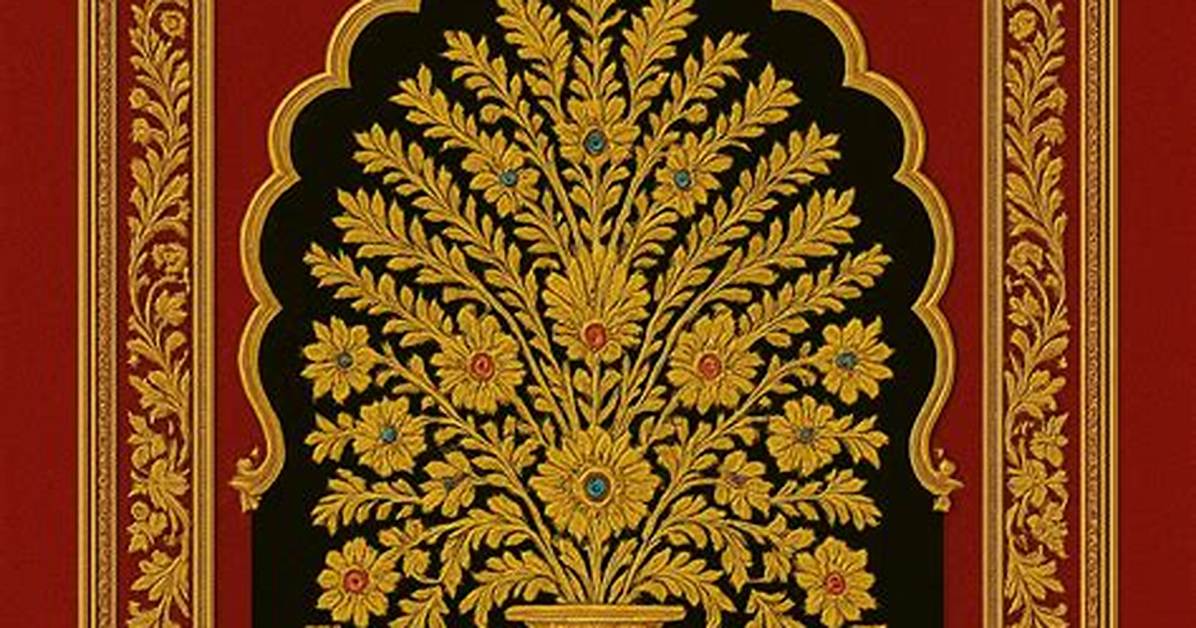
Traditional Subcontinent needlework operated as a complex visual language. In Awadh and Delhi, zardozi incorporated specific geometric configurations, Islamic calligraphy, badla flat wire tracery, and stylized floral motifs like the kalka (paisley) that signaled regional rank and spiritual protection. The density of the embroidery was engineered to lend physical weight and ceremonial gravitas to imperial robes.
Under Victorian trade syndicates, these centuries-old patterns were severed from their original meanings. British pattern-masters in London began supplying tracing sketches directly to Indian trading factories. They ordered artisans to superimpose European naturalist botany, such as English ivy, dog-roses, and Gothic revival scrollwork, over traditional Asian needle techniques.
Victorian buyers wanted ornate, exotic surfaces, but they insisted that the motifs conform to domestic furnishings. Zardozi was stripped of its architectural presence and relegated to hearth screens, evening bags, cushion covers, and slippers. Delicate white-work styles such as Lucknow chikan and hooked ari needlework met a similar fate: stripped of regional nuance, these intricate styles were repurposed as interchangeable neck frills for imported Manchester cottons.
Sarah Jenkins is a veteran tech journalist with over 12 years of experience covering artificial intelligence, mobile innovations, and digital ethics. Her insights have appeared in leading technology publications worldwide.
