Fact-Checking Gold Conductivity: Why Electronics Choose It Despite Lower Speed Than Silver
 By James H. Sterling
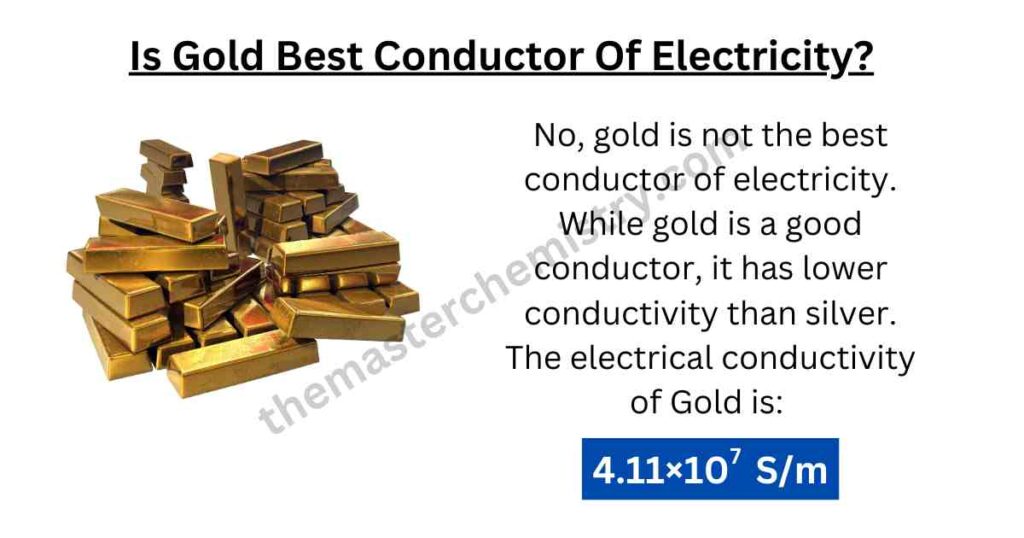
Every metal conducts electricity through a shared sea of delocalized valence electrons, but atomic architecture dictates how easily those electrons drift under an applied voltage. Gold features a single electron in its outermost 6s shell, shielded by tightly held inner shells and subject to relativistic contraction effects. This subatomic arrangement produces an electrical resistivity of approximately 2.44 × 10⁻⁸ ohm-meters at room temperature.
To quantify conductivity across metallurgical applications, the engineering community relies on the International Annealed Copper Standard (IACS). Established in 1913, the index benchmarks standard commercial-grade annealed copper at 100% IACS. On this universally recognized benchmark, silver achieves roughly 105% to 108% IACS, making it the most conductive metal on the periodic table.
Gold registers at approximately 70% to 75% IACS.
When currents pass through pure gold, electron collisions generate marginally more thermal resistance than they would inside an identical track of silver or copper. Electricity certainly moves through it with high efficiency, but calling gold the "best" conductor ignores metallurgical data. If pure transmission efficiency were the sole priority of circuit board designers, gold would never leave the ground.
James Sterling reports on renewable energy developments, climate policy, ecological conservation, and green tech innovations around the globe.
