Acne Vs. Perioral Dermatitis: Visual Signs and Symptoms Around Your Mouth
 By Alexander Ross
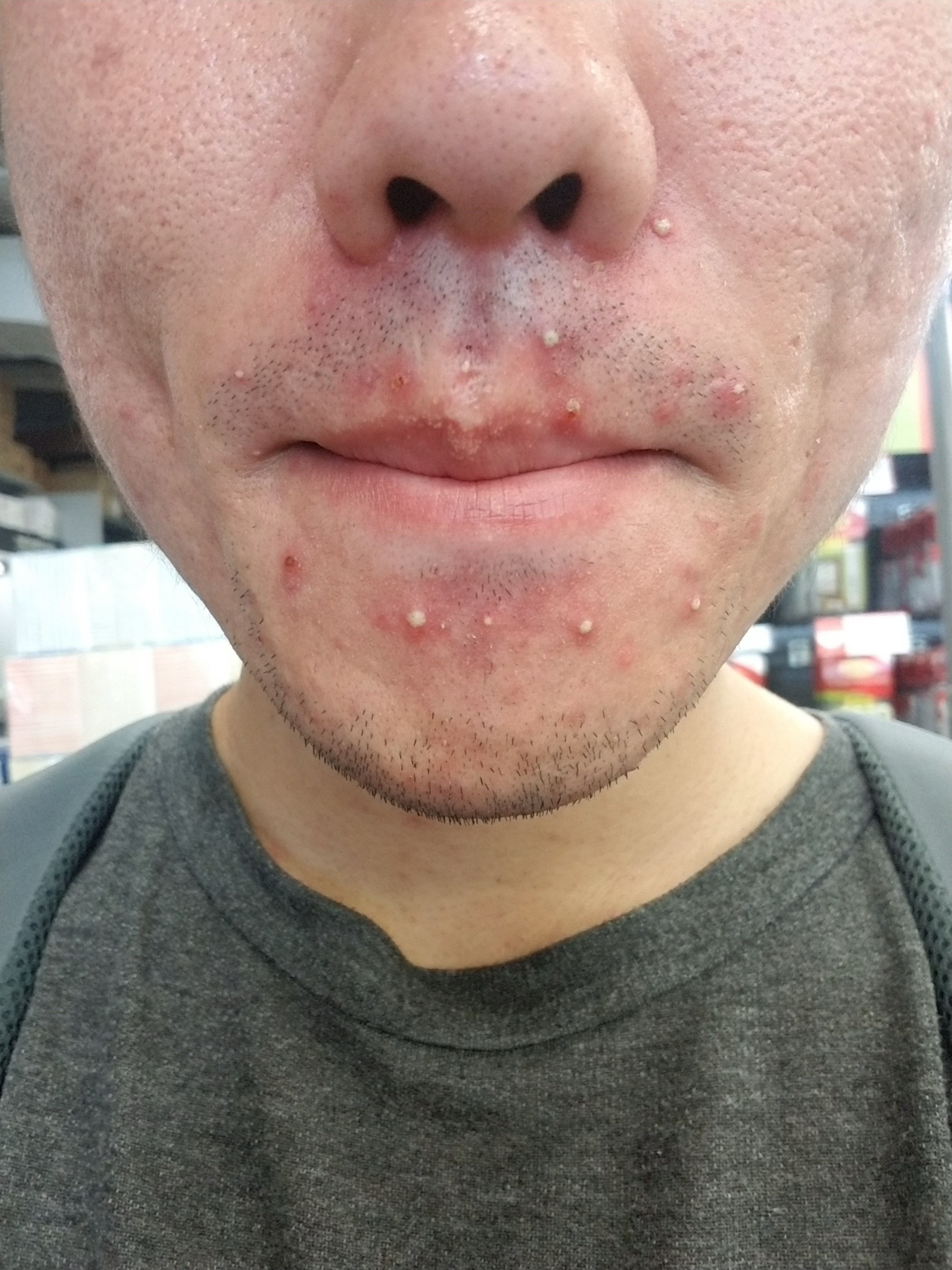
Distinguishing ordinary acne from conditions like perioral dermatitis or folliculitis requires scrutinizing subtle physical characteristics. Acne vulgaris relies on the presence of the comedone. If you examine the breakout in bright, indirect light and spot open comedones (blackheads) or closed comedones (flesh-colored whiteheads) intermingled with inflamed red bumps, the pathology belongs squarely in the acne camp. Acne lesions vary widely in scale, presenting simultaneously as tiny surface bumps, deeper papules and pustules, and occasionally tender cysts.
ACNE VULGARIS PERIORAL DERMATITIS
• Open/closed comedones present • No true comedones (no blackheads)
• Lesions vary in size and stage • Uniform, pinhead-sized pink papules
• Touches the lip vermilion border • Clear white "halo" spares lip line
• Aching, throbbing, tender to touch • Prickling, burning, dry tight sensation
Perioral dermatitis presents a strikingly uniform picture. The lesions manifest as tiny, monomorphic pink papules, often clustered closely together against a backdrop of mild scaling and erythema. A defining clinical indicator is the "vermilion border sparing" effect: the bumps will crowd the skin around the lower face but almost always leave a clear, unaffected band of pale skin roughly two millimeters wide immediately surrounding the lip margin.
Sensory feedback provides another vital diagnostic clue. Acne throbs and aches, generating localized soreness beneath the dermis when pressure is applied. Perioral dermatitis rarely throbs; instead, patients describe a persistent stinging, itching, or hot burning sensation that intensifies whenever moisture or standard skincare products touch the area.
Alexander Ross has covered the video game industry for a decade, writing deep dives on game design, esports tournaments, VR developments, and gaming culture.
